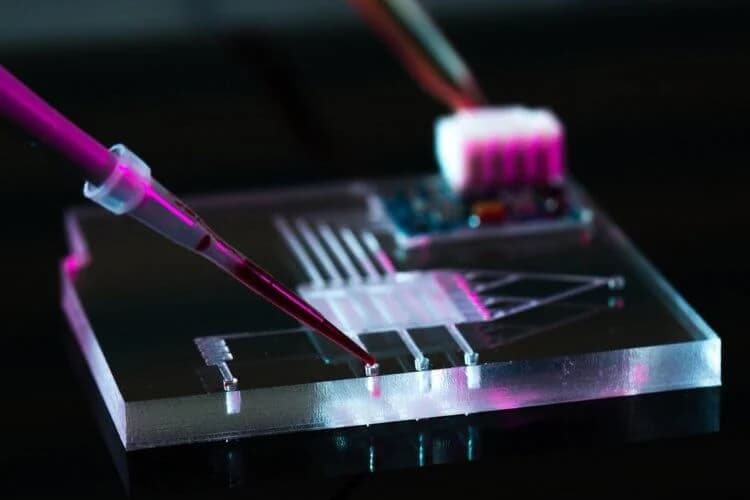
Innovation rarely emerges from a single breakthrough. More often, it develops through years of research, experimentation, collaboration, and technological refinement. Today, scientists, engineers, and entrepreneurs are working at the intersection of multiple disciplines to address some of humanity’s most pressing challenges—from climate change and resource scarcity to healthcare accessibility and digital transformation. As governments, universities, and private companies increase investments in research and development, certain fields are beginning to stand out as the primary drivers of innovation for the next decade.
For students, researchers, and academic professionals, understanding these emerging research directions is more important than ever. Identifying high-impact topics not only improves the relevance of academic projects but also increases opportunities for publication, funding, and future career development. Whether preparing a dissertation, developing a research proposal, or exploring future scientific trends, recognizing where innovation is heading can provide a significant strategic advantage.
“The future belongs to those who can identify emerging scientific opportunities before they become mainstream.”
The coming decade is expected to be characterized by convergence. Rather than isolated discoveries within individual disciplines, many of the most transformative innovations will emerge when fields such as artificial intelligence, biotechnology, nanotechnology, materials science, and environmental engineering intersect. This convergence is already creating entirely new research ecosystems that were almost unimaginable only a few years ago.
The Research Landscape of the Next Decade
Several global factors are influencing research priorities worldwide. Population growth, aging societies, environmental pressures, energy demands, cybersecurity risks, and increasing digitalization are forcing both public and private institutions to invest in technologies capable of delivering scalable solutions.
The table below highlights some of the most influential research domains expected to shape innovation through the 2030s.
| Research Area | Primary Objective | Potential Impact |
| Artificial Intelligence | Intelligent decision-making systems | Automation, healthcare, finance |
| Nanotechnology | Advanced materials and nanoscale engineering | Medicine, electronics, energy |
| Biotechnology | Biological innovation and genetic engineering | Healthcare, agriculture |
| Renewable Energy | Sustainable power generation | Climate mitigation |
| Quantum Computing | Next-generation computational power | Cryptography, simulations |
| Advanced Materials | High-performance functional materials | Manufacturing, aerospace |
| Robotics | Autonomous physical systems | Industry, logistics |
| Cybersecurity | Digital infrastructure protection | Global information security |
Artificial Intelligence Beyond Automation
Artificial intelligence has become one of the most influential research fields in modern history. However, the next decade will likely move beyond traditional automation and machine learning applications toward more sophisticated forms of intelligent systems.
Researchers are increasingly focusing on explainable AI, which aims to make algorithmic decision-making transparent and understandable. As AI systems become integrated into healthcare diagnostics, legal assessments, financial decision-making, and public policy, transparency will become a regulatory and ethical necessity.
Another rapidly expanding area involves AI-assisted scientific discovery. Machine learning models are already helping researchers identify new drug candidates, predict molecular behavior, and accelerate materials development. Instead of replacing scientists, these systems increasingly function as collaborative research tools capable of analyzing enormous datasets that would otherwise require years of manual investigation.
The combination of AI with other scientific disciplines is expected to become one of the defining characteristics of innovation during the coming decade.
Nanotechnology and the Engineering of Matter
Nanotechnology continues to attract substantial academic and industrial attention because it enables scientists to manipulate materials at the molecular and atomic levels. This ability creates opportunities to develop products with properties that cannot be achieved using conventional manufacturing approaches.
Research in nanomedicine is particularly promising. Scientists are developing nanoscale drug delivery systems capable of targeting diseased cells with unprecedented precision while minimizing side effects. Such approaches could significantly improve treatments for cancer, neurological disorders, and chronic inflammatory diseases.
Nanomaterials are also transforming energy storage technologies. Researchers are investigating nanoscale electrode structures that could increase battery capacity, improve charging speeds, and extend operational lifespans. As global demand for electric vehicles and renewable energy infrastructure expands, advances in nanotechnology may become essential for meeting future energy requirements.
“The ability to engineer materials atom by atom may prove as transformative as the invention of the microchip.”
Beyond medicine and energy, nanotechnology research is contributing to environmental remediation, water purification systems, smart coatings, and next-generation electronic devices.
Biotechnology and Genetic Engineering
Few research fields possess the transformative potential of modern biotechnology. The ability to understand, modify, and manipulate biological systems is creating opportunities that extend far beyond traditional medicine.
Advances in gene editing technologies have accelerated research into genetic therapies capable of addressing previously untreatable diseases. Scientists are exploring methods for correcting inherited genetic disorders at their source rather than merely managing symptoms.
Synthetic biology represents another rapidly growing area. Researchers are designing biological systems that can produce pharmaceuticals, biodegradable materials, sustainable fuels, and specialized industrial chemicals. The ability to engineer living organisms for practical applications may fundamentally reshape manufacturing and resource production over the coming decades.
Biotechnology is also becoming increasingly important in agriculture. Climate change and population growth are placing unprecedented pressure on global food systems, creating demand for crops that are more resilient, productive, and resource-efficient.
The Global Energy Transition
The transition toward sustainable energy systems remains one of the most urgent scientific challenges of the twenty-first century. While renewable energy technologies have advanced considerably, significant research opportunities remain.
Scientists are working to improve solar cell efficiency, develop more durable wind energy components, and create advanced battery technologies capable of supporting large-scale energy storage. Research into hydrogen production and utilization is also gaining momentum as countries explore alternatives to fossil fuels.
Energy innovation extends beyond power generation. Smart electrical grids, intelligent energy management systems, and advanced storage solutions are becoming critical components of future infrastructure. Researchers who combine expertise in engineering, computer science, and materials science are increasingly positioned at the forefront of these developments.
The significance of energy research is likely to grow as governments worldwide establish ambitious carbon reduction targets and invest heavily in climate-related technologies.
Quantum Computing and the Limits of Computation
Although still in its early stages, quantum computing has attracted extraordinary interest from both academia and industry. Unlike conventional computers, quantum systems exploit quantum mechanical phenomena to perform certain calculations dramatically faster than classical machines.
Researchers are exploring applications in cryptography, pharmaceutical development, materials simulation, logistics optimization, and financial modeling. While practical quantum computing remains technically challenging, progress continues at a remarkable pace.
Many experts believe that advances achieved during the next decade may fundamentally alter how complex computational problems are approached. Universities and research institutions worldwide are therefore expanding investments in quantum information science and related disciplines.
Advanced Materials for a Changing World
Every technological revolution has been enabled by materials innovation. The Bronze Age, Iron Age, Silicon Age, and modern semiconductor era all demonstrate the profound influence of material science on civilization.
Today, researchers are developing materials with extraordinary properties. Self-healing polymers, ultra-light composites, programmable matter, biodegradable plastics, and high-temperature superconductors represent only a small portion of current investigations.
Advanced materials are expected to play a central role in aerospace engineering, renewable energy systems, medical devices, construction technologies, and consumer electronics. Researchers capable of integrating computational modeling, nanotechnology, and materials engineering may contribute to some of the most influential discoveries of the coming decades.
Human-Centered Innovation
Technology alone does not determine societal progress. Increasingly, researchers are recognizing the importance of human-centered approaches that prioritize ethics, accessibility, sustainability, and social impact.
Questions surrounding data privacy, algorithmic fairness, environmental responsibility, and equitable access to innovation are becoming central components of modern research agendas. Institutions are encouraging interdisciplinary collaboration between engineers, scientists, social researchers, economists, and policymakers to ensure technological advancements align with societal needs.
This broader perspective is reshaping how innovation is evaluated. Future breakthroughs will likely be judged not only by technical performance but also by their long-term consequences for individuals, communities, and ecosystems.
Emerging Interdisciplinary Research Areas
Some of the most exciting opportunities are appearing at the intersection of multiple disciplines.
| Interdisciplinary Field | Combined Disciplines |
| AI-Driven Drug Discovery | Artificial Intelligence + Biotechnology |
| Nanoelectronics | Nanotechnology + Electrical Engineering |
| Precision Medicine | Genetics + Data Science |
| Smart Materials | Materials Science + Computing |
| Climate Informatics | Environmental Science + AI |
| Bioinformatics | Biology + Computer Science |
These hybrid fields illustrate a growing reality: tomorrow’s innovations are increasingly unlikely to fit neatly within traditional academic boundaries.
Conclusion
The next decade of innovation will be shaped by researchers capable of addressing complex global challenges through interdisciplinary thinking, scientific rigor, and technological creativity. Artificial intelligence, nanotechnology, biotechnology, renewable energy, quantum computing, and advanced materials research are all positioned to influence industries, economies, and societies on a global scale.
For students and academics, understanding these emerging directions provides more than intellectual curiosity—it offers a roadmap for selecting research topics with lasting relevance and impact. While predicting the future is never certain, the trends already visible today suggest that the most transformative discoveries will emerge where scientific disciplines converge, technological capability expands, and human needs remain at the center of innovation.